Enviro-friendly side hustle for the pulp mills?
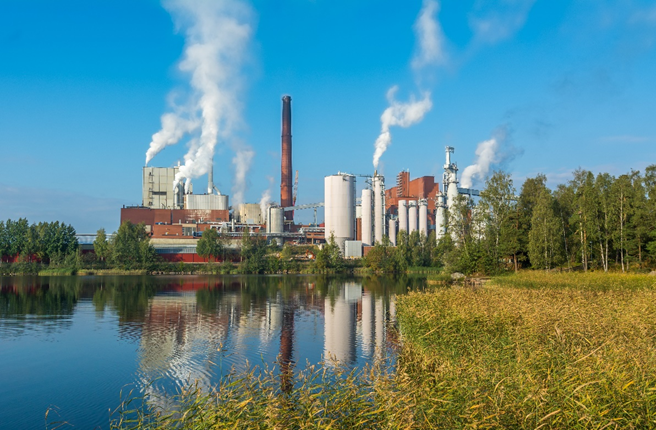
Pulp Mill — Chicago, IL — Mid America Paper Recycling
A study claims that pulp mill could harness the carbon dioxide they generate to produce enough synthetic fuels to power an entire country like Finland.

If it’s one thing we love, it’s innovation. Finding innovative ways to increase recycling, sustainability and positive actions for the environment topped the list of annual goals from most businesses, from equipment manufacturers to mills, recyclers, and converters alike.

We hear that many paper mills are partnering with forest sustainability programs to strengthen their commitments to implement and maintain forest chain of custody requirements. Some mills are promoting circularity in their value chain with the help of their suppliers, and practicing responsible forest stewardship, which contributes to the removal of carbon dioxide from the atmosphere, helping to reduce greenhouse gas emissions during manufacturing and increasing the recovery and recycling of fiber-based products.

But select pulp mills, the majority of which are highly efficient already, are evaluating a creative way to effectively repurpose the excess of power they generate. Because they also use just about every bit of wood they receive, they have a side stream of power that has been underutilized: bio-based carbon dioxide.

A 2020 study from Lahti University of Technology LUT on bio-based carbon emissions shows the CO 2 generated by pulp mills can be captured and transformed into a massive quantity of synthetic fuels.

According to an article from UPMpulp.com, the CO 2 from pulp mills could be used to create enough synthetic fuels to power an entire country. But how would the mills recover the emissions? One way is to scrub carbon dioxide from pulp mill exhausts and combine it with hydrogen to create synthetic petrol, kerosine or diesel. These synthetic fuels could replace fossil fuels currently used in ships, planes, trucks and cars, UPM says.

The capture and storage of CO 2 could offer the pulp and paper industry the possibility to act as site for negative CO 2 emissions. In addition, captured biogenic CO 2 could be used as a raw material for bioproducts, the study indicates.

Biogenic CO 2 generated from pulp mills is part of the biomass-based carbon circle where growing forests isolate CO 2 from the atmosphere. This circle is generally considered neutral to the environment. Turning biogenic CO 2 from pulp mills into synthetic fuels would further close the loop.

Jyrki Ovaska, Executive Vice President, Technology, at UPM, says the technology already exists to capture carbon dioxide, produce hydrogen from electrolysis and combine them to create synthetic fuels, although some of the technology might not be mature yet. “The real hurdles are the market price of energy and the existing regulatory framework.”

In addition, for the move to make economic sense, the electricity needed would have to be produced inexpensively enough. And energy, fuel and emissions, are highly regulated, so the regulations would need to be updated, UPM points out. Producing hydrogen by electrolysis would require increasing electricity production by as much as 270 percent. “We will be looking at producing synthetic fuels from pulp mill emissions very closely,” Ovaska points out.

UPM recognizes that constantly improving efficiency uses less fuel, and is taking actions to lower CO 2 emissions from its own pulp mills and other operations and to improve energy efficiency by 1 percent every year. Another way is to use different types of energy sourcing, such as wind power, which would reduce its paper mill CO 2 emissions by 200,000 tons annually as of 2022. There is much work to be done, Ovaska admits, “but we have an opportunity to be carbon positive, not just in our operations but also if you think of substituting fossil-based products with our wood-based products. If all those boxes can be checked we could be the first company to do this.”

More information on the study is available at https://www.lut.fi/
Commercial cardboard recycling in Columbus, OH
By Mid America Paper Recycling December 4, 2025
Learn how to strengthen your OCC and mixed paper recycling program to boost revenue, reduce volatility, and create more stable returns in shifting markets.
By Mid America Paper November 12, 2025
Learn how Georgia paper mill closures impact recycling operations and discover steps your business can take to stay efficient and profitable.
By Mid America Paper Recycling October 14, 2025
FV Recycling has acquired Mid America Paper Recycling, expanding into the Midwest and creating a stronger, nationwide recycling partner for customers.
By Mid America Paper Recycling September 16, 2025
Mid America Paper Recycling shows how smarter logistics turns recycling into profit. Learn why cost avoidance beats cost reduction in today’s market.
We get the most out of your recyclables at Mid America Paper recycling
August 7, 2025
Mid America Paper Recycling brings nearly 100 years of experience to every site we serve. We’ve grown by helping companies like yours get more out of their operations.
May 10, 2025
When the Mill Shuts Down: What Happens to All That Recycled Corrugated?
A large pile of plastic is sitting on the ground in a parking lot.
By Admin April 29, 2025
Rethinking the Future of Plastic Packaging: A Recycling Challenge We’re Tackling Head-On
A graph showing key recycling caps from survey of 142 businesses
By Admin April 3, 2025
What 142 Businesses Taught Us About Recycling Practices in 2025
February 17, 2025
Driving Value, Innovation, and Sustainability: Meet Brian Gaughan, Mid America Paper Recycling’s Business Development Leader
February 2, 2025
For printing and packaging firms, floor space is a critical resource directly tied to productivity, safety, and profitability. Operating under typically tight profit margins, these companies cannot afford inefficiencies that hinder operations or add unnecessary costs. Yet, in many facilities, valuable floor space is wasted on scrap and trim waste from the paperboard manufacturing and converting process. Gaylords of loose material waiting to be processed and bales awaiting pickup can create bottlenecks, disrupt workflows, and eat into already slim margins. At Mid America Paper Recycling, we provide timely solutions to help manufacturers reclaim their floor space and protect their bottom line. Here’s how: The Hidden Costs of Wasted Floor Space Inefficient use of floor space doesn’t just limit operational effectiveness—it carries significant financial and operational consequences. Here’s what’s at stake: High Real Estate Costs : Manufacturing and warehouse space is expensive. According to Prologis, the annual cost for warehouse space averages $13.20 per square foot , including base rent and operating expenses. A facility dedicating 1,000 square feet to waste storage could incur $13,200 annually in avoidable costs. Safety Risks and Workplace Injuries : Cluttered floors with bins of loose material and stacked bales create hazards that increase the risk of workplace injuries. The National Safety Council reports that the average cost of a medically consulted workplace injury exceeds $40,000 , factoring in productivity losses, medical bills, and administrative expenses. Missed Revenue Opportunities : Every square foot dedicated to waste is a square foot unavailable for revenue-generating activities. For example, a production machine occupying 1,000 square feet could generate $100,000 to $500,000 annually in additional revenue. Increased Labor Costs : Managing waste on the plant floor is time-consuming. Employees spend hours moving, organizing, and handling waste instead of focusing on higher-value tasks. At an average wage of $20 per hour , one additional hour spent daily on waste management can cost a company $5,000 annually per employee . How Mid America Paper Recycling Reclaims Space Reclaiming floor space starts with understanding a facility’s unique challenges. Through our waste audit services , we identify inefficiencies in waste management handling practices in your plant facilities and provide customized solutions to optimize space utilization. Trailer Spotting: A Game-Changer for Floor Space One of the most effective strategies we offer printers and board converters is trailer spotting. Instead of storing waste on the plant floor, a dedicated trailer is stationed on-site to accumulate scrap and trim waste, and then rotated back to our recycling facility for materials processing. Maximizes Plant Space : By removing bales and scrap from the floor at key intervals, plants can free up hundreds or even thousands of square feet for production or finished goods storage. Improves Safety : Clear, clutter-free floors reduce the risk of accidents and ensure smoother workflows. Cuts Handling Costs : Employees spend less time managing waste, which translates to significant labor savings. Streamlines Operations : Trailers simplify the waste management process, ensuring efficient material handling and faster pickups. Faster Financial Return on Recyclables : By consolidating and efficiently managing scrap materials in a trailer, recyclables can be transported directly to mills more frequently. This reduces delays, accelerates payments, and ensures more consistent cash flow tied to a recycling program. For example, one large printing client reduced their reliance on floor space for bales by 50% , enabling them to install additional equipment and increase production capacity. Execution in Action At Mid America Paper Recycling, we deliver results through precise execution of recycling programs. Our Chicago-based facility processes 51 different paper grades using advanced baling systems and a fleet of 125 trailers in our logistics network. By leveraging our infrastructure and consulting expertise, we help customers reclaim floor space, reduce costs, and maximize profitability year after year. Partner with Mid America to Reclaim Your Space  For any packaging manufacturer, the value of floor space cannot be overstated. Don’t let waste take up space that could be driving your business forward. Let Mid America Paper Recycling help you optimize your operations, starting with a free waste audit to discover how we can help you unlock the hidden value in your facility.