Turning Cardboard Waste into Operational Savings
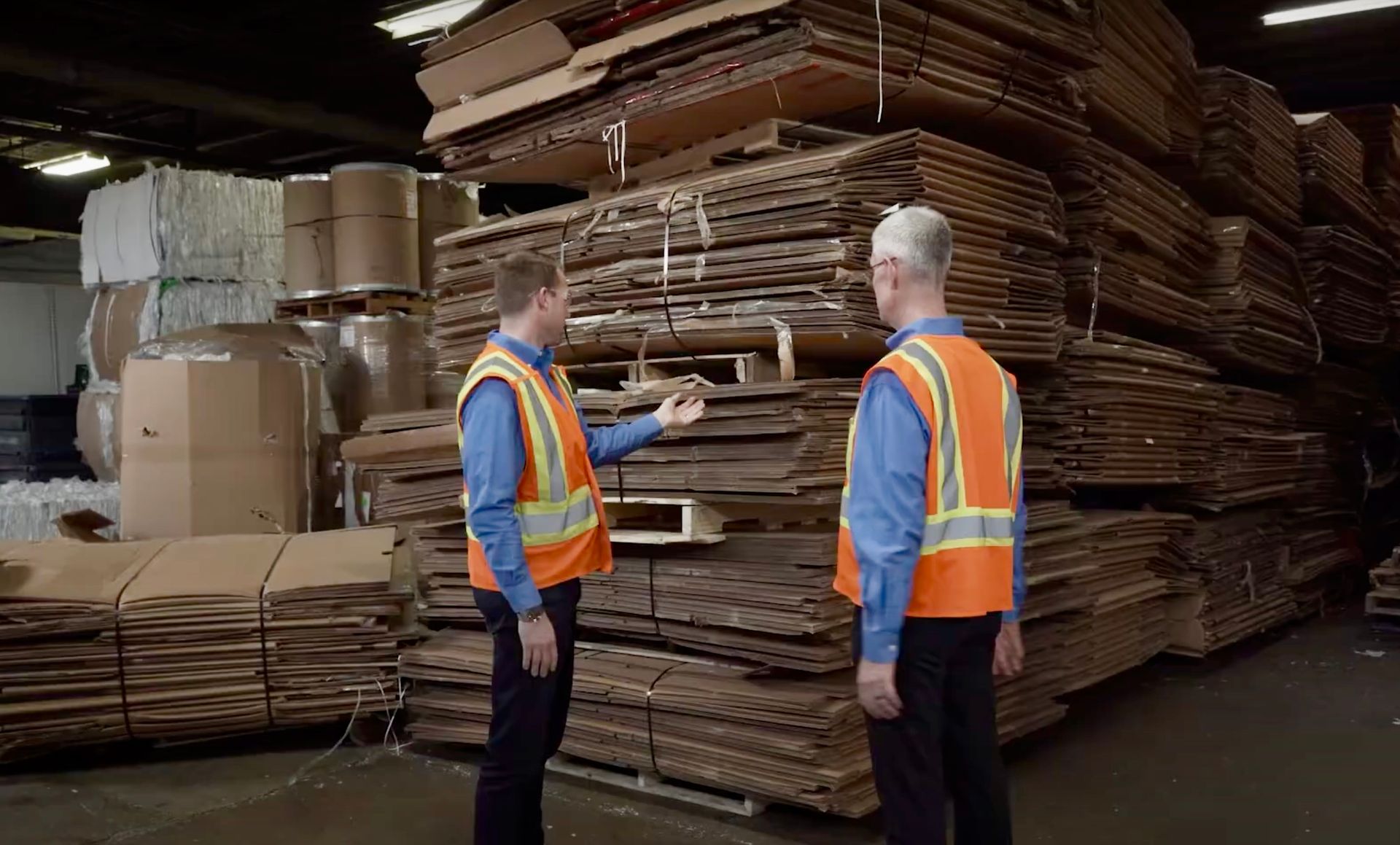
In most packaging plants and distribution centers, scrap is treated as an operational byproduct. It’s something to manage, move, or remove. Trim waste accumulates behind die cutters. OCC stacks up near dock doors. Gaylords fill quietly in the corner of the warehouse.
But for high-volume pre-consumer scrap generators, such as corrugated converters, folding carton plants, printers, and regional distribution hubs, scrap fiber is not incidental. It is economic.
The difference between a disposal mindset and a baling strategy can materially impact labor efficiency, freight economics, and even revenue contribution to your business.
Loose Scrap Is a Margin Leak
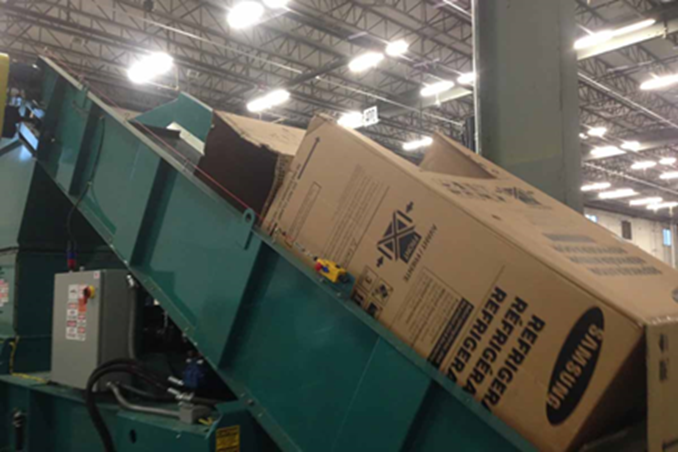
When OCC or double-lined kraft is shipped loose, someone downstream must densify it before it reaches a mill. That processing cost is embedded in the transaction. In effect, when you don’t bale in-house, you are allowing another party to capture the value of that compaction.
The hidden costs extend beyond processing. Loose scrap drives higher haul frequency, increases dock congestion, and requires repeated handling. Forklifts move the same material multiple times. Labor hours accumulate in small increments that rarely show up as a line item but quietly erode productivity.
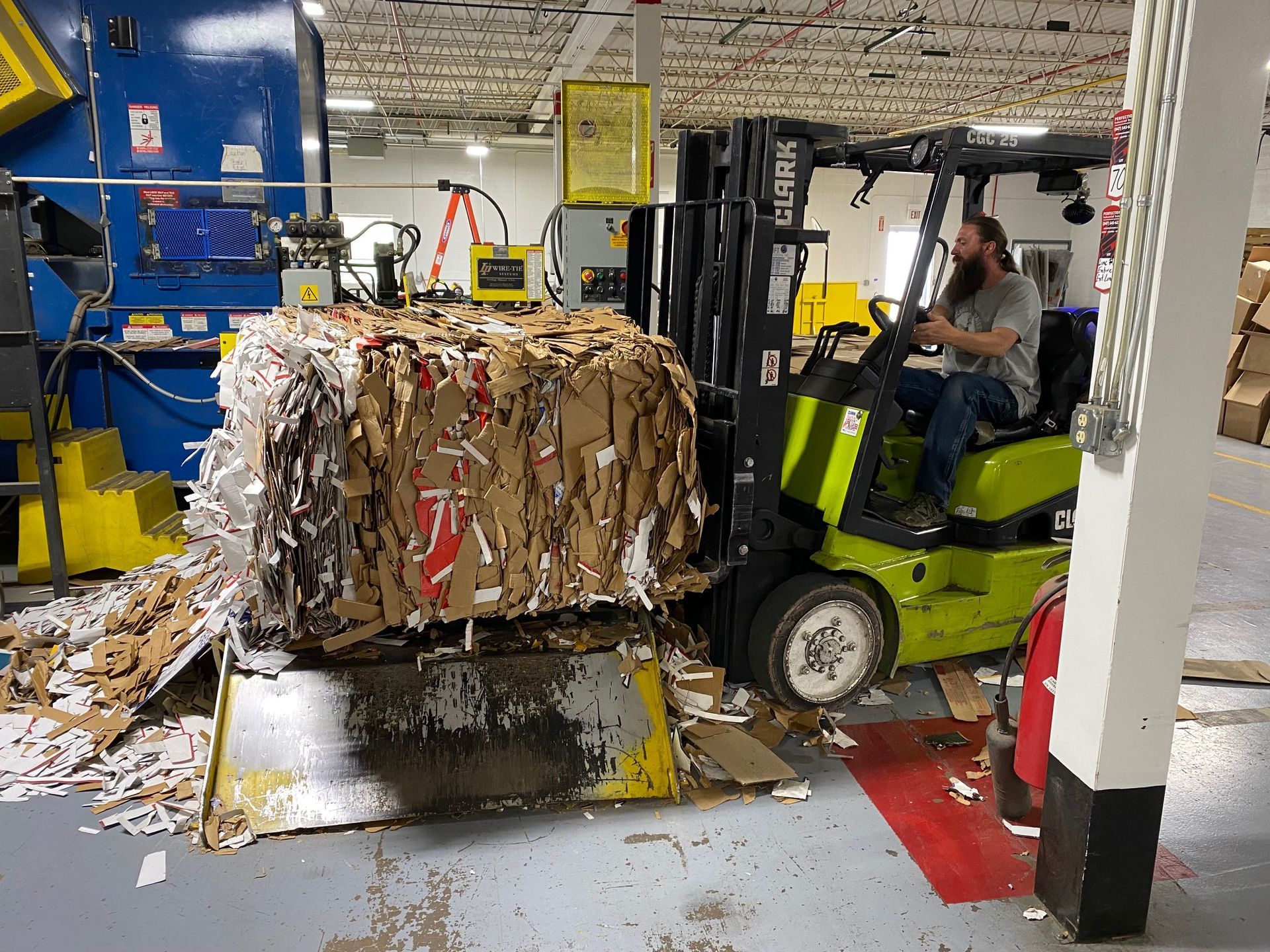
An industrial baler can reduce scrap volume by as much as 90 percent. But the real economic driver isn’t simply volume reduction, it’s density.
Density Creates Freight Leverage
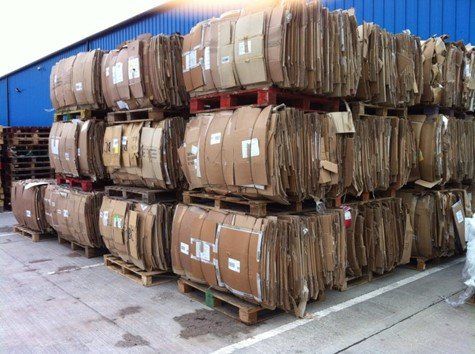
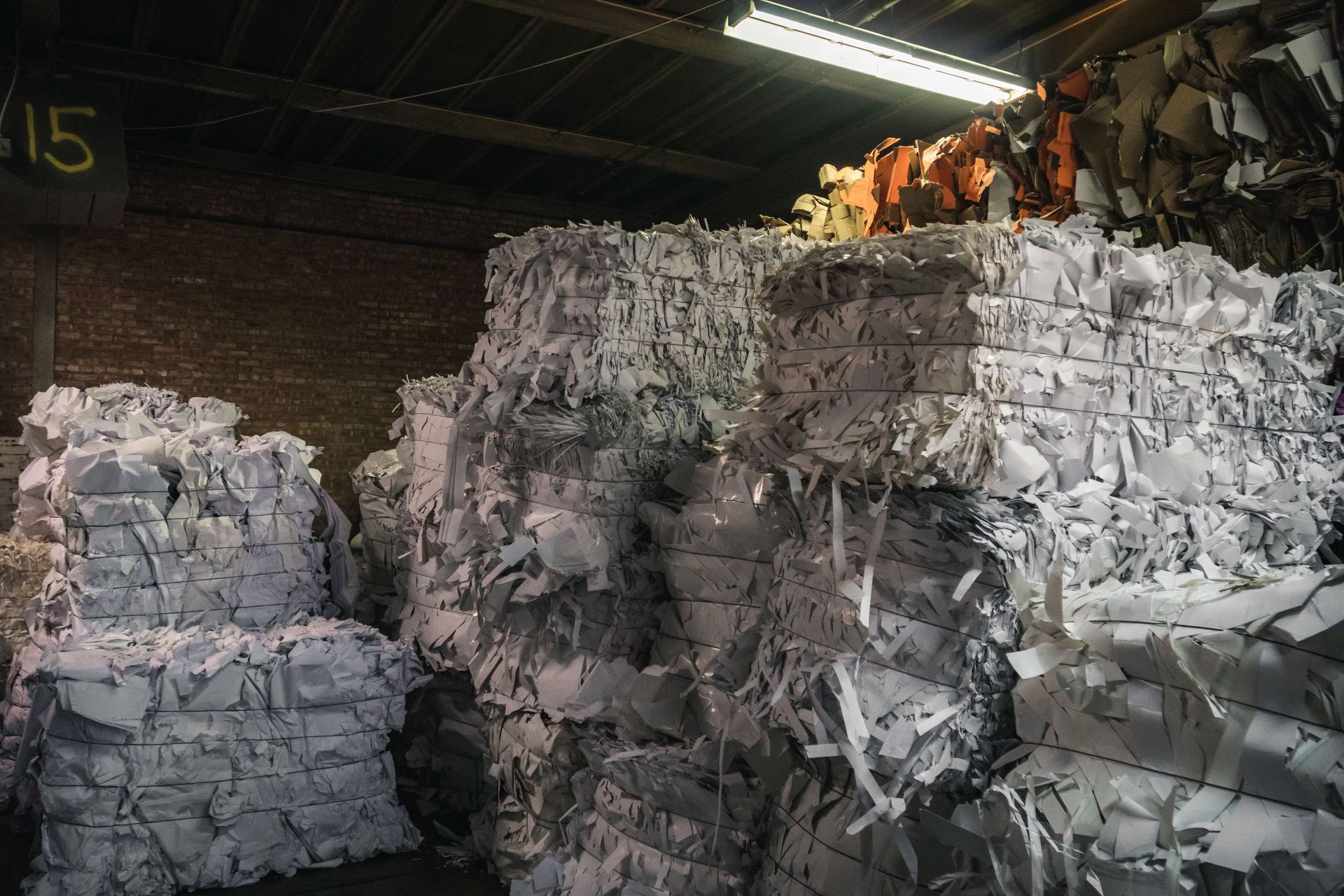
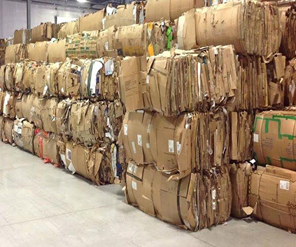
Freight is often the largest overlooked variable in recycling economics. A trailer leaving a facility at 12,000 or 15,000 pounds of loose material represents a missed opportunity. That same trailer loaded with 40,000 to 44,000 pounds of dense, mill-ready bales fundamentally changes the per-ton cost structure.
Heavier, denser bales reduce the number of loads required. They lower transportation cost per ton and decrease the number of dock touches needed to manage scrap. In volatile freight markets, that leverage becomes even more significant.
For converters operating in tight-margin environments, freight optimization through proper bale density can mean the difference between scrap being neutral, or contributory to your bottom line.
Bale Quality Influences Pricing
Not all bales are created equal. Mills evaluate more than just weight, too. They look for density consistency, grade purity, moisture control, and bale integrity. Bale wire placement and compression uniformity also factor into mill acceptance.
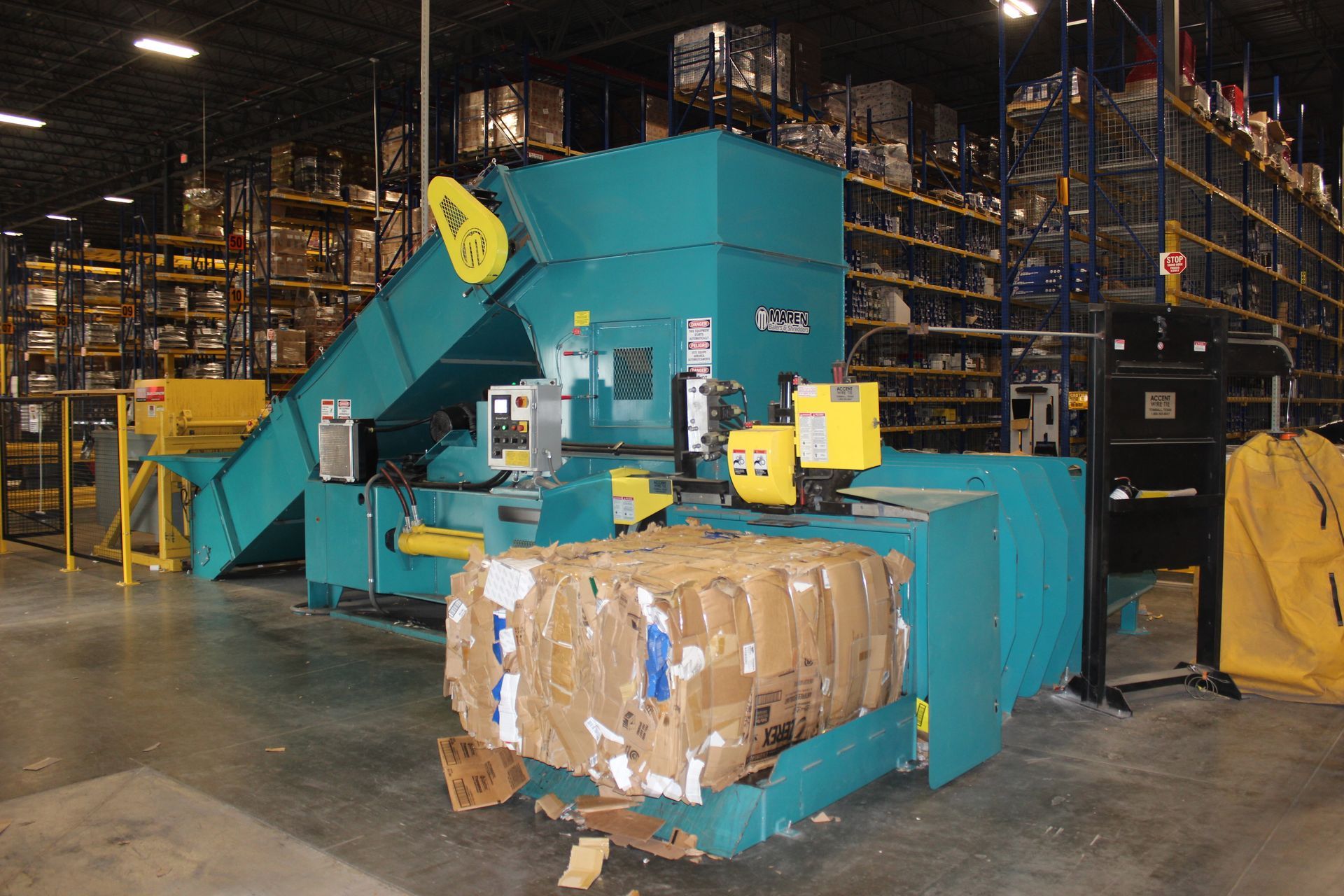
Facilities running multiple grades such as OCC, DLK, or mixed paper, often find that more advanced baling systems improve separation discipline and bale quality. A two-ram or closed-door horizontal baler, for example, can maintain grade integrity at higher volumes, producing consistent mill-ready units.
Consistency strengthens mill relationships. Strong mill relationships support pricing stability. Over time, that consistency becomes part of the plant’s financial predictability.
When Labor Becomes the Constraint
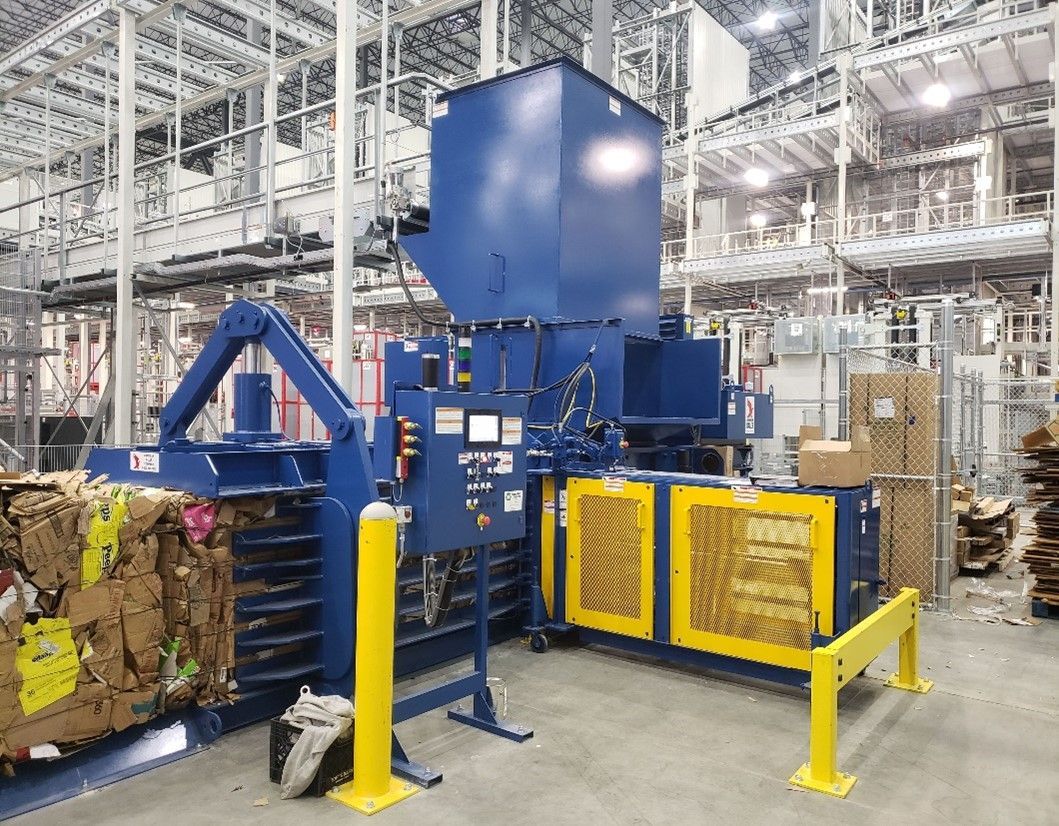
Many growing plants begin with a vertical downstroke baler. At moderate volumes, this can be an appropriate entry point. But as scrap generation increases, labor requirements begin to scale with it.
Manual loading, staging, and tying demand operator time. Scrap transport inside the facility competes with production movement. What began as a cost-saving measure can become a labor bottleneck.
At higher volumes, typically 60 to 80 tons per month and above, horizontal systems with automatic feeding and tying often make more economic sense. The capital investment is higher, but the labor drag is lower. Automation shifts scrap handling from reactive to integrated, aligning materials management with production speed.
The return on investment calculation should account not only for commodity revenue but also for labor hours saved, reduced hauling frequency, and the elimination of disposal expense.
In many high-volume operations, payback can occur within 12 to 18 months.
The Risk of Misalignment
Perhaps the most common mistake in baling strategy is misalignment. That is, selecting equipment based on brochure specifications rather than operational economics.
An undersized baler produces lighter bales, increasing freight cost and labor time. An oversized system may sit underutilized, tying up capital without delivering incremental value.
The right baler is determined by monthly tonnage, grade mix, scrap growth trajectory, available floor space, power capacity, and freight strategy. It must align with the financial goals of the organization, not simply with current scrap volume.
Scrap as a Strategic Asset
High-volume converters and distribution centers generate predictable scrap streams. That predictability is your leverage. When managed strategically, scrap fiber becomes a recurring revenue contributor, a hedge against rising disposal costs, and a measurable sustainability metric.
The objective is not simply to bale. It is to increase revenue from waste generation while reducing indirect operational costs.
In today’s packaging and e-commerce environment, scrap is no longer just an operational inconvenience. It is an economic variable, and one that deserves executive attention.
For facilities willing to treat scrap as a managed asset rather than a disposal problem, the economics of baling can shift the conversation from cleanup to contribution.
Mid America Paper provides cardboard balers in Alexandria, LA, Chicago, IL, Little Rock, AR, and across the United States. Our balers help reduce scrap volume, improve recycling efficiency, and lower hauling costs for manufacturers of all sizes. Contact us today for a baling consultation.